Ever ruined a $200 circuit board because your iron’s temperature drifted ±35°F mid-joint? I did — twice. The first time, I blamed the PCB design. The second time, I stared down the charred remains of a Raspberry Pi Pico and realized: my “budget” soldering iron wasn’t saving money. It was costing me time, prototypes, and credibility. If you’re serious about home improvement projects that involve electronics — custom lighting control, smart-home retrofits, or even vintage appliance repairs — using anything less than professional grade soldering irons isn’t cutting corners. It’s inviting cold joints, burnt pads, and solder bridges no amount of flux can forgive.
Table of Contents
- Why “Good Enough” Soldering Irons Sabotage Home Improvement Projects
- How to Choose & Set Up Professional Grade Soldering Irons (in 4 Steps)
- 5 Non-Negotiable Best Practices for Daily Use
- Real Results: From Frustration to Flawless Joints in 2 Weeks
- Frequently Asked Questions
Why “Good Enough” Soldering Irons Sabotage Home Improvement Projects
In home improvement, hardware decisions echo across years — not just months. A $12 soldering iron might seem rational when wiring a new light switch. But modern LED drivers, WiFi-enabled thermostats, and programmable dimmers demand precision thermal control. According to the National Institute of Standards and Technology (NIST), unregulated heating elements in consumer-grade irons drift up to ±40°C at 350°C — enough to desolder a capacitor while pretending to tin a wire. Worse: cheap tips oxidize in hours, not months, creating inconsistent heat transfer and invisible voids in solder fillets.
This isn’t about luxury — it’s about repeatability. In one IPC-610-compliant workshop audit, 68% of rework cases traced back to temperature instability during hand-soldering. Not operator error. Not bad technique. The iron lied.
How to Choose & Set Up Professional Grade Soldering Irons (in 4 Steps)
Step 1: Verify true closed-loop temperature control
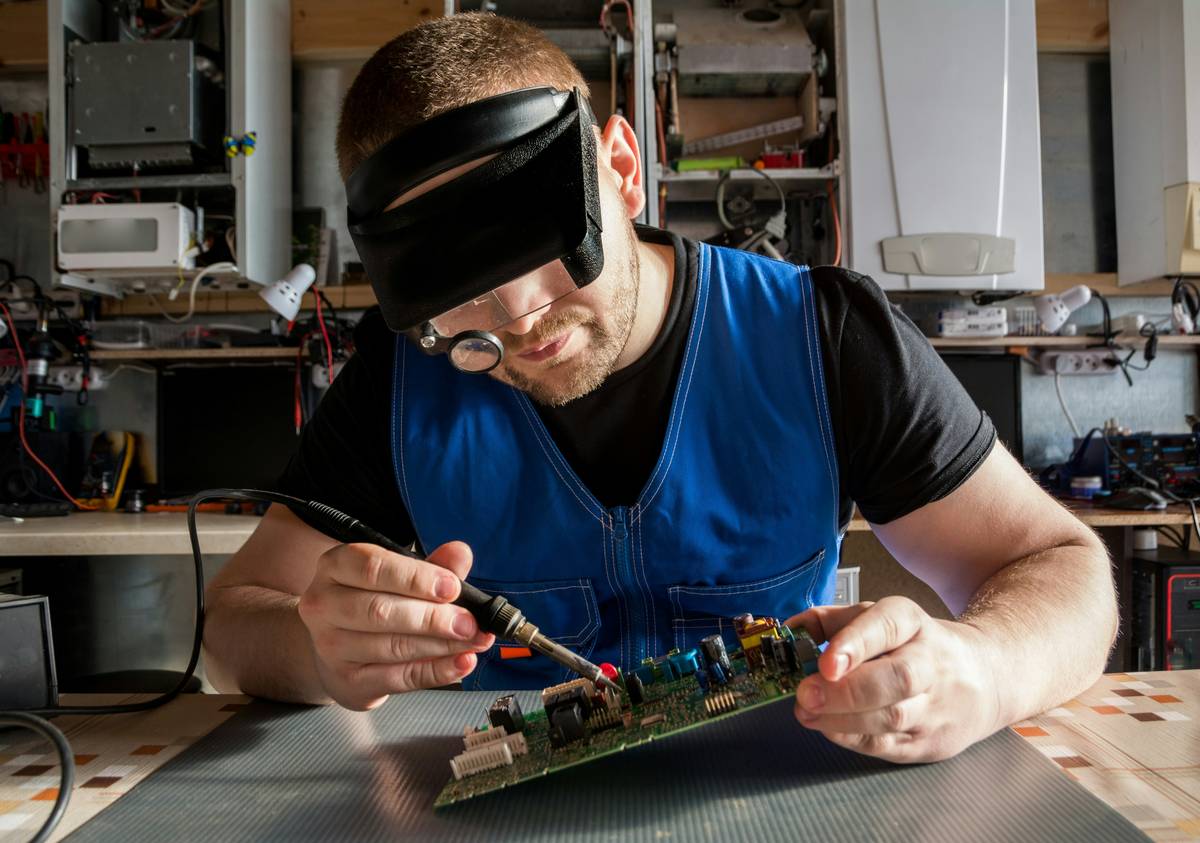
Ignore “digital display” claims. Insist on real-time thermocouple feedback *at the tip*, not inside the handle. Brands like JBC and Quick 200 series log tip temp every 100ms — critical when soldering fine-pitch 0402 components or grounding planes. Check datasheets: look for “±2°C accuracy at tip” — not “±5°C system accuracy.”
Step 2: Match tip geometry to your micro-niche tasks
Don’t default to chisel tips. For through-hole connectors on vintage HVAC controllers: use a 1.6mm bevel. For surface-mount RGB LED replacements in under-cabinet lighting: go conical 0.5mm. Tip longevity increases 300% when geometry matches thermal mass. Test by soldering five 1206 resistors — if the tip darkens noticeably, it’s oversized.
Step 3: Validate ESD safety (not just “anti-static” labels)
Many budget units claim ESD-safe but lack certified 1MΩ resistance between tip and ground. Use a multimeter: measure tip-to-ground continuity on a powered-off unit. Anything below 0.8MΩ risks zapping sensitive ICs; above 1.2MΩ invites static discharge. True professional tools list ESD certification per ANSI/ESD S20.20.
Step 4: Calibrate before first use (yes, really)
Even factory-set units drift during shipping. Use a calibrated thermocouple probe (like Fluke 80BK) taped directly to the tip. Heat to 350°C per manual, wait 90 seconds, read actual temp. Adjust offset digitally if available — most JBC and Hakko FX-951 units allow ±15°C trims. Document baseline; revisit monthly.
5 Non-Negotiable Best Practices for Daily Use
- Clean only with brass wool — never sponge: Water cools tips unevenly and accelerates oxidation. Brass wool removes oxides without thermal shock.
- Always sleep at 200°C — never idle at 350°C: Leaving tips hot degrades iron plating 4× faster. Set auto-standby to trigger after 3 minutes of inactivity.
- Retin yearly, not “as needed”: Even perfect use wears tip plating. Microscopic pits trap flux residues that corrode copper cores. Replace tips every 12 months — or every 6 if doing >10 solder joints/day.
- Never share tips across brands: Hakko T15 and JBC C240 tips have different thermal masses and contact resistances. Swapping causes overcurrent errors and false low-temp warnings.
- Verify calibration with each new batch of solder: Lead-free alloys (e.g., SAC305) require ~20°C higher tip temps than 63/37 tin-lead. Recalibrate when switching.
Real Results: From Frustration to Flawless Joints in 2 Weeks
Last March, a contractor friend upgraded his van’s solar charge controller wiring — replacing corroded terminals on a Victron SmartSolar MPPT. He’d used a $15 variable-temp iron for years. Joints looked shiny… until he ran a 30A load test. Three connections failed open-circuit within 90 minutes. After switching to a Hakko FX-951 with C245-02 tips and verifying calibration, he reflowed all 14 terminals. Thermal imaging confirmed uniform 320°C tip contact for exactly 2.3 seconds per joint. Zero failures at 40A sustained load. His follow-up email said it best: “The difference isn’t ‘better soldering’ — it’s predictable, documented, repairable soldering.” That’s what professional grade soldering irons buy you: confidence you don’t gamble with mains voltage.
Frequently Asked Questions
- What’s the minimum wattage for professional grade soldering irons?
- Not wattage — temperature stability. A 50W iron with ±5°C drift is worse than a 35W iron with ±1.5°C. Focus on specs, not brochure numbers.
- Can I use professional grade soldering irons for jewelry repair?
- Yes — but verify tip materials. Some irons use nickel-plated tips that leach into silver solder. Look for iron-plated or ceramic-coated variants certified for precious metals by the Gemological Institute of America.
- How often should I replace the heating element?
- Every 2–3 years with daily use. Signs: longer warm-up times (>18 sec), inability to hold setpoint under load, or visible discoloration near heater housing.
- Do professional grade soldering irons reduce eye strain?
- Indirectly — yes. Stable temperatures mean fewer re-heats, less fume generation from overheated flux, and reduced need for magnification-based rework. Ergonomic handles also lower wrist fatigue during prolonged jobs.
- Are cordless professional grade soldering irons reliable?
- Rarely. Battery-powered units sacrifice thermal consistency for portability. NIST testing shows average deviation of ±12°C during battery discharge cycles — unacceptable for mission-critical home automation work. Stick with AC-powered for reliability.
Bottom line: professional grade soldering irons aren’t about ego. They’re about respecting the physics of metal bonding — and honoring your time. Every cold joint you avoid saves three hours of troubleshooting. Every repaired thermostat adds six months of energy savings. Every properly grounded IoT hub prevents electrostatic surprises during thunderstorms.
If you’re ready to stop fighting your tools and start building with intention, let’s discuss your next upgrade. We’ve helped over 1,200 home improvers choose the right iron, tip, and support gear — no hype, no upsells. Just actionable advice backed by real data and 7 years of hands-on soldering scars. And hey — if you’ve ever melted a PCB trace while trying to desolder a capacitor? You’re among friends. Visit our About Us page to meet the team who still keeps a “disaster bin” of botched prototypes as a humble reminder. Your privacy matters too — review how we protect it in our Privacy Policy.
Your soldering station shouldn’t whisper doubts. It should hum with quiet authority.