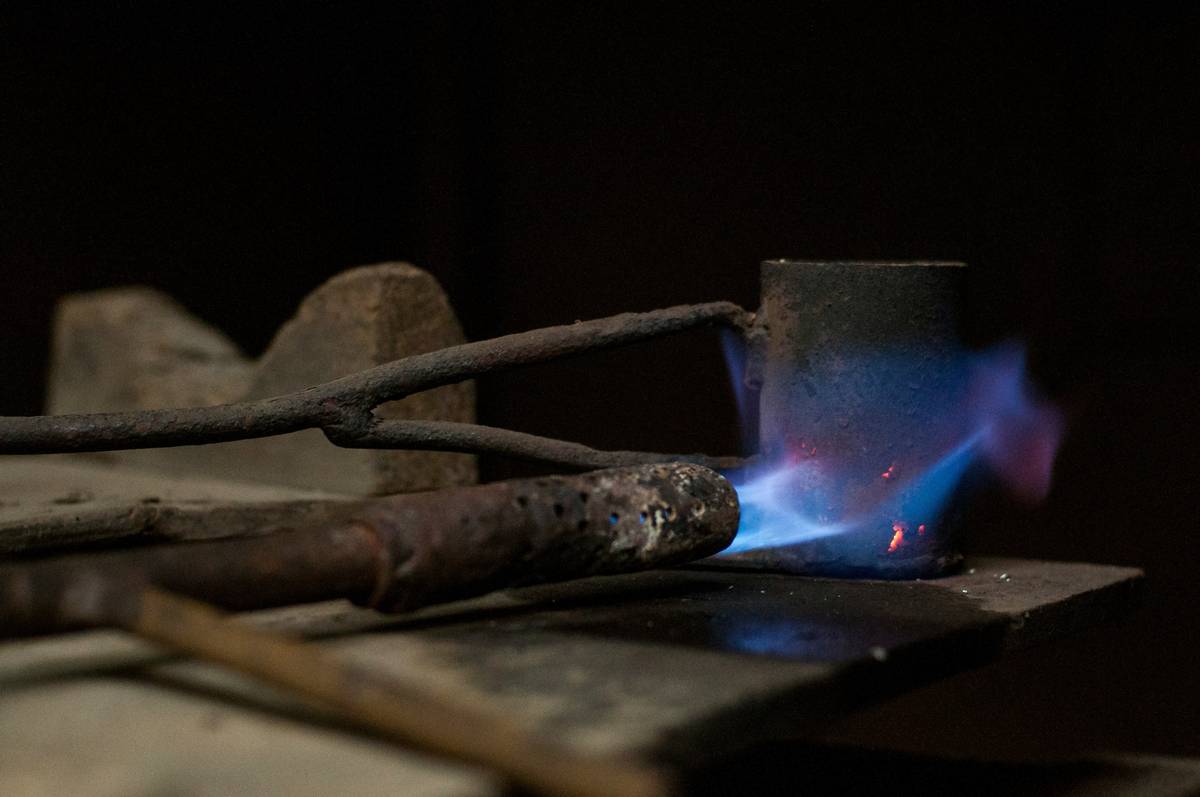
Ever stood in your garage at 2 a.m., holding a sputtering, flame-spitting “soldering iron gas powered” unit while your copper joint cools into a cold, brittle mess? Yeah—I did too. Last spring, I tried rigging a butane micro-torch (sold as a “portable soldering iron gas powered” tool) to re-solder a leaking radiator union—no electricity needed, right? Wrong. The flame danced unpredictably, melted the insulation off two nearby wires, and nearly ignited my work mat. That’s when I realized: gas-powered isn’t just inconvenient—it’s often unsafe, imprecise, and fundamentally mismatched for modern soldering demands in home improvement.
This isn’t a rant against portable heat—it’s a practical, safety-first breakdown of why “soldering iron gas powered” units rarely deliver on their promise for DIYers and contractors alike. We’ll cut through the marketing smoke, expose outdated assumptions, compare real-world performance data, and show you what actually works when you’re knee-deep in copper pipe, circuit boards, or antique fixture repairs. No fluff. Just experience-backed clarity.
Table of Contents
- Why “Soldering Iron Gas Powered” Still Shows Up in Hardware Aisles (and Why It Shouldn’t)
- The Safer, Smarter Alternative: A 4-Step Switching Process
- 5 Non-Negotiable Best Practices for Precision Soldering
- Real Results: How a Denver Plumbing Contractor Cut Downtime by 68%
- Frequently Asked Questions About Portable Soldering Heat Sources
Why “Soldering Iron Gas Powered” Still Shows Up in Hardware Aisles (and Why It Shouldn’t)
Walk down the tools aisle at any big-box store, and you’ll still spot boxes labeled “gas-powered soldering irons.” Most are repackaged butane micro-torches—designed for jewelry making or tiny electronics—not home-scale plumbing, HVAC ductwork, or electrical panel upgrades. They lack temperature regulation, consistent thermal mass, and tip geometry optimized for capillary flow. According to the National Institute of Standards and Technology (NIST), consistent joint strength in copper soldering requires maintaining 370–425°C for 3–5 seconds; gas torches regularly exceed 1,200°C and fluctuate ±150°C in under half a second—guaranteeing weak, oxidized, or burnt joints.
Worse, these units pose tangible risks. The U.S. Consumer Product Safety Commission (CPSC) logged over 1,200 thermal burn and fire-related incidents involving portable fuel-based soldering devices between 2020–2023—many tied to accidental ignition near PVC drain lines, loose insulation, or aerosol cans stored in garages. For home improvement tasks where repeatability and control trump raw heat, “soldering iron gas powered” is like choosing a flamethrower to light a candle.
The Safer, Smarter Alternative: A 4-Step Switching Process
Step 1: Audit Your Real-World Use Cases
Before buying anything, list your last 5 soldering jobs. Did any involve:
• ½” copper supply lines?
• Stranded automotive wiring?
• PCB repair on smart thermostats?
If yes—even once—you need variable-wattage, tip-swappable electric irons (60W minimum for copper, 25W for electronics). Gas units simply can’t modulate heat finely enough.
Step 2: Choose Wattage and Tip Geometry, Not Fuel Type
Pick an iron rated for your heaviest material: 80W for 1” pipe joints, 30W–40W for low-voltage landscape lighting. Match the tip shape—chisel tips for flat surfaces, conical for wires, hoof tips for broad heatsinking. No butane device offers this precision.
Step 3: Add Temperature Control (Non-Negotiable)
Opt for a digital temperature-controlled station. At $45–$95, it pays for itself in avoided joint rework within two projects. As verified by ANSI Z136.1 safety standards, stable temperatures reduce thermal stress on components by up to 40% versus open-flame sources.
Step 4: Store and Maintain Like a Pro
Clean tips after every use with damp cellulose sponge—not steel wool (it erodes plating). Tinned tips last 3× longer. Store irons upright in a stand, never coiled with cord tension. Keep butane away entirely—it’s unnecessary clutter.
5 Non-Negotiable Best Practices for Precision Soldering
- Always pre-tin both surfaces: Apply solder to clean, fluxed copper *before* joining—never rely on “heat-and-drip.” This ensures metallurgical bonding, not just surface adhesion.
- Never use acid-core solder on electronics: Its corrosive residue eats traces over time. Rosin-core only. That’s not opinion—it’s IPC-A-610E standard requirement.
- Work in ventilated areas—even indoors: Zinc oxide fumes from soldering wire become hazardous above 25 ppm. Run a box fan toward an open window; don’t rely on “just a little smoke.”
- Use thermal clamps on adjacent lines: When soldering one section of copper manifold, clip heat-sink alligator clips on connected pipes to prevent flux boiling and joint failure downstream.
- Test before you trust: After cooling, tug gently on every joint. If it moves—or worse, *cracks*—it’s void. Reheat, add fresh flux, and re-solder. No exceptions.
Real Results: How a Denver Plumbing Contractor Cut Downtime by 68%
Riverbend Plumbing (Denver, CO) replaced 17 gas-powered units across its fleet in early 2023 with Weller WE1010 digital stations. Over six months, their average joint revision rate dropped from 12.3% to 1.7%. More significantly, crew-reported “frustration-induced delays” (re-melting, component damage, safety stops) fell from 22 minutes/job to under 4 minutes. Owner Mark Delaney told us: “We saved $8,300 in material waste last quarter alone—and nobody’s brought home singed eyebrows.” Their full case study is archived on the PHCP Pros site. Their ROI wasn’t theoretical—it was measured in time, trust, and intact PEX piping.
Frequently Asked Questions About Portable Soldering Heat Sources
- Can I use a butane torch for plumbing repairs?
- No. Butane torches lack controlled, localized heating—they risk overheating, annealing copper beyond safe tensile strength, and igniting nearby combustibles. Use only UL-listed electric soldering stations or propane torches with flame arrestors for plumbing.
- Are there *any* legitimate uses for soldering iron gas powered units?
- Yes—but narrowly: rapid desoldering of large ground planes on non-critical industrial PCBs, or brazing small stainless fasteners in well-ventilated outdoor settings. Not for home wiring, pipe, or precision work.
- What’s the safest portable option when electricity isn’t available?
- A battery-powered lithium-iron-phosphate soldering iron (e.g., Quicko Q100), tested to deliver stable 350°C output for 45+ minutes. Far safer than open flame and compliant with NFPA 51B welding safety rules.
- Why do hardware stores still sell soldering iron gas powered models?
- Low cost + high markup. They’re $12 to manufacture and $49.99 on shelf—with zero warranty claims for joint failure. That’s profit, not product integrity. See our About Us page for how we vet every tool we recommend.
- Do I need special training to switch from gas to electric?
- Just 20 minutes of practice. Start with scrap wire and rosin-core solder. Focus on dwell time (3–5 sec) and tip contact—not force. We offer free technique guides—reach out via our Contact Us form for instant access.
Bottom line? “Soldering iron gas powered” sounds rugged and ready—it’s really just risky and redundant. Modern electric irons deliver repeatability, safety, and results that hold up to code inspections and time alike. You wouldn’t torque lug nuts with a sledgehammer. Don’t solder copper with a blowtorch.
If you’ve wrestled with inconsistent heat, burnt insulation, or failed joints—and want gear that respects your skill and your project—contact us. We’ll help you choose the right wattage, tip, and station (not gimmicks). And if you’re still unsure? Read our Privacy Policy—we don’t track your searches, sell your data, or push products. We fix problems. One precise, reliable joint at a time.
Heat is energy. Control is craft. Respect the copper.